
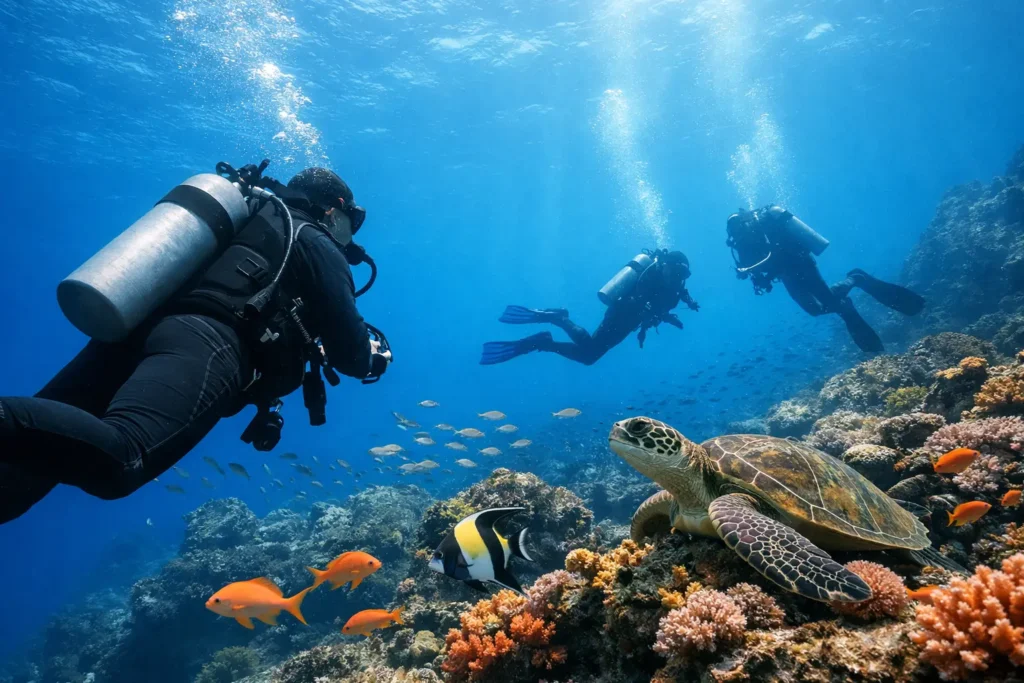
If you are planning a dive trip to Guanacaste, timing changes the experience more than most people expect. Costa Rica scuba conditions by month can mean the difference between glassy mornings with big blue visibility and green water packed with plankton, rays, and seasonal surprises. Neither is automatically better. It depends on whether you care most about calm seas, clear photos, big animal encounters, or simply the easiest conditions for building confidence.
On the Pacific side near the Catalinas Islands, conditions shift with the dry season, the rainy season, wind patterns, and water movement. For newer divers, that matters. For certified divers chasing mantas or sharks, it matters just as much. The best month is not one fixed answer. The best month is the one that matches your experience level and what you want to see.
How costa rica scuba conditions by month really change
The first thing to know is that You can have a beautiful calm surface and modest visibility below, or a little chop on top with excellent life underwater.
Water temperature usually runs warmer in the rainy months and cooler during the windy upwelling season. That cooler water can bring nutrie Guanacaste diving is dynamic. Visibility can vary not just by season, but by day – and sometimes even by hours or minutes. Just the time to descend once with a guest who had ear problems (needing more than 10 minutes to equalize), the clear blue water changed to brown, cold water ! Sediments, and those nutrients can attract bigger marine life. The trade-off is visibility may drop compared with the cleaner blue water many vacation divers picture.
This is where good planning helps. If you are newer to scuba, calmer surface conditions and stronger instructor support often matter more than chasing one specific species. If you are experienced and comfortable in changing ocean conditions, some of the most exciting wildlife months come with a little less predictability.
December through April – dry season, wind, and changing visibility
December starts the transition into the dry season. You can get very good diving, but conditions can feel more variable as the weather settles. Some days are calm and clear. Others are windier, especially as you move deeper into January and February.
One time, on December 30th, 2023, it was incredible – the best day of the year. Dolphins, humpback whales, manta rays – just incredible with amazing visibility. But the 31st was the worst day of the year. We damaged some equipment during a sidemount course. Finally, the currents were so strong we had to return to Playa Conchal to find a protected area with low visibility. Same place, same moment – just one day difference!
January and February are often the months when people are surprised by the surface. On land, the weather is sunny and beautiful. On the water, stronger Papagayo winds can create chop and make boat rides bumpier. For confident certified divers, that may be a fair trade. For beginners or anyone prone to seasickness, these months call for realistic expectations and a team that keeps groups small and briefings clear.
Underwater, the cooler water during this period can be productive. You may see rays, reef sharks, eels, turtles, and dense fish life around the rocky formations that make the Catalinas area so memorable. Visibility is often decent, but not always postcard-blue. It can swing based on wind and upwelling.
March and April usually continue the dry pattern, but many divers find these months a little more comfortable than peak wind season. Surface conditions can settle compared with earlier dry-season weeks, though every year has its own rhythm. Water may still be on the cooler side, and marine life remains strong.
If your priority is sunshine on vacation and reliable dry weather topside, this season is attractive. If your priority is the easiest possible ocean conditions for your first breaths underwater, you may prefer later months when the sea often relaxes.
May through August – calmer seas and a strong all-around window
May is one of the most underrated months on the Guanacaste coast. The rainy season starts to arrive, but it usually does not mean nonstop rain. More often, it means greener landscapes, less wind, and calmer ocean mornings. For many divers, that is a sweet spot.
June often continues that pattern. Seas can be calmer, entries and exits feel more comfortable, and the overall experience tends to suit students, refreshers, and divers who want supportive conditions. Visibility can be very good, though as always, it depends on local water movement and plankton levels.
July and August are often excellent all-around months for diving in this region. Surface conditions are frequently friendlier than in the windiest dry-season period, and underwater life stays active. This is the kind of window that works well for mixed groups, where one person wants certification training and another wants fun dives with a chance of seeing larger animals.
For many travelers, these are the easiest months to enjoy both comfort and adventure. If you are doing Open Water, a refresher, or your first guided dives after time away from scuba, this stretch often offers a reassuring balance.
September through November – warmer water and big-life potential
September and October are often when experienced divers start asking more specific questions about mantas. These months are well known on the Pacific coast for strong chances of encountering giant manta rays around the Catalinas Islands. Nothing in diving is guaranteed, but this is one of the most exciting periods of the year if big animals are high on your wish list.
The trade-off is that rainy-season diving always carries some variability. You may have warm water and incredible encounters, then a day where visibility softens because of runoff or plankton. For underwater photographers, that means adjusting expectations. For wildlife-focused divers, it is often absolutely worth it.
November can still be very rewarding, especially as the seasons start to shift again. You may get some of the life of the rainy season with hints of the cleaner transition toward dry-season patterns. Conditions can be mixed, but that does not mean poor. It means flexible.
If your dream trip is built around giant mantas and rich marine activity, early fall deserves serious attention. If your priority is maximum predictability, another season may suit you better.
Month-by-month quick view for Guanacaste divers
December to February
Sunny weather on land, cooler water, and more wind on the ocean. Good marine life, but surface conditions can be bumpier. Better for divers comfortable with open-ocean movement.
March to April
Still dry season, often a little more comfortable than peak wind months. Solid all-around diving with continued wildlife potential and improving trip comfort.
May to June
A favorite for many instructors and returning divers. Calmer seas are common, the coast turns green, and conditions often feel friendlier for courses and refreshers.
July to August
Reliable all-around season for fun dives and training. Good balance of comfort, marine life, and travel experience.
September to October
Prime season for manta hopes around the Catalinas area. Warmer water and exciting wildlife, with visibility that can vary.
November
Transitional month with good potential and mixed conditions. Best for divers who stay flexible and value life sightings over perfect consistency.
Choosing the right month for your experience level
If you are brand new to scuba, the easiest month is usually not about one famous animal. It is about comfort. Calmer surface conditions, manageable surge, and patient in-water coaching make your first experience better than forcing a date because of a social media highlight. Late spring and summer often give beginners a more relaxed start.
If you are already certified and want the best wildlife odds, you can be more strategic. Cooler, nutrient-rich periods can be productive for sharks and schooling life. Early fall is often the headline season for mantas. The more comfortable you are with changing visibility and ocean motion, the more seasonal options open up.
If you are returning after a long break, do not underestimate conditions. A refresher in calm water can restore confidence fast. The same diver might feel rusty in a windier month with stronger surface chop. There is no shame in choosing easier conditions. Smart divers do it all the time.
What matters more than the month
A good operator can shape your dive day almost as much as the season. Small groups, honest briefings, well-maintained equipment, and site selection based on that morning’s conditions all matter. That is especially true in Guanacaste, where the ocean rewards flexibility.
The best dive centers do not promise the impossible. They tell you what the ocean is doing, who the conditions suit, and how to make the day safe and enjoyable. That approach is better for beginners, better for families, and better for experienced divers who want a professional team rather than a crowded cattle-boat setup.
At ChrisDiving, that is exactly how we approach planning. We match the dive plan to current conditions, diver comfort, and experience level so your trip feels exciting for the right reasons.
So when should you book?
If you want the simplest answer, May through August is a strong choice for many travelers because it often blends comfort, flexibility, and very enjoyable diving. If manta rays are your main goal, aim for September and October. If your vacation is built around dry, sunny weather on land and you do not mind more wind exposure on the boat, December through April can still be excellent.
The smartest way to book is to start with your real priority. Do you want your first calm scuba experience, a confidence-building certification trip, or a chance at the biggest animals of the year? Once you answer that, the right month usually becomes much clearer.
The ocean here changes, and that is part of the appeal. Pick the month that fits your comfort level, trust the team guiding you, and let the conditions work for the kind of dive trip you actually want.


