
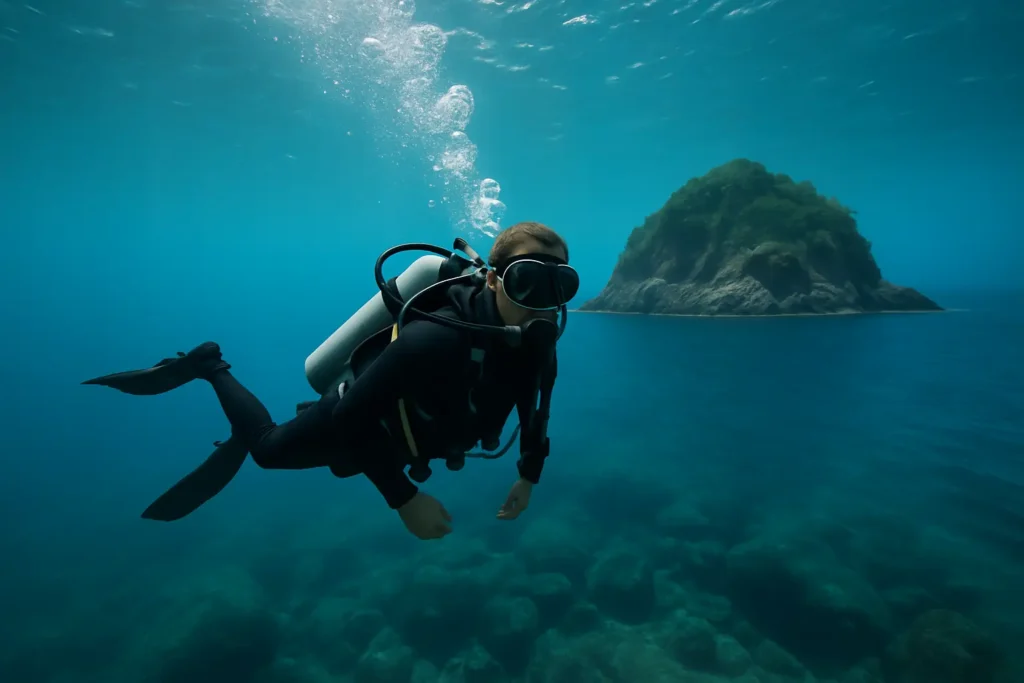
You picked Guanacaste for the beaches and sunsets. The surprise is what happens a few miles offshore – volcanic islands, deep-water currents, and the kind of marine life that turns a “nice vacation dive” into a story you keep telling.
Scuba diving in Guanacaste, Costa Rica is not one single experience. Conditions can shift by season, by site, even by time of day. That’s a good thing when you’re with a team that plans conservatively, briefs clearly, and keeps groups small enough that you’re never guessing what to do next.
What scuba diving in Guanacaste, Costa Rica is really like
Guanacaste sits on Costa Rica’s Pacific side, where the ocean can be calm and clear one day and more energetic the next. That variety is why divers love it, and also why first-timers sometimes feel nervous reading generic “Pacific diving” descriptions online.
Most of the region’s signature dives are boat dives. You’ll typically head out from the Flamingo, Potrero, or Tamarindo area toward the Catalina Islands and nearby coastal sites. The ride is part of the adventure, but it also tells you a lot about the day’s conditions. A professional operation watches wind, swell, and current patterns constantly and chooses sites that match your experience level, not just a “schedule.”
Underwater, expect rocky reefs, lava formations, and cleaning stations where larger animals show up. You’re not coming here for endless shallow coral gardens. You’re coming for movement, structure, and the chance to see big animals when timing and conditions line up.
The Catalinas Islands: the heart of the local dive scene
If you’ve heard about diving here, you’ve heard about the Catalinas. They’re a chain of rocky islands off the Guanacaste coast, and they earn their reputation because they concentrate life.
The topography is a big part of it. Walls, pinnacles, and channels create places where fish shelter and predators cruise. Depending on the site and season, you might see white tip reef sharks resting, eagle rays gliding past in formation, turtles moving between the rocks, and schools of jacks that seem to appear out of nowhere.
Visibility can be a gift or a trade-off. When the water is calm and the conditions settle, you can get those wide, blue-water views that make spotting rays and sharks easier. When the water is more nutrient-rich, visibility may drop, but the ocean often feels more “alive,” with more action on the reef.
Best time of year for scuba diving in Guanacaste
The simple truth is that you can dive here year-round, but you can’t expect the same ocean every month.
Dry season (roughly December to April) usually brings more consistent weather topside and often better visibility. It’s popular for travel for a reason. If you’re a newer diver or you’re coming back after time away, this season can feel more predictable.
The green season (roughly May to November) can deliver excellent diving too, with warm water and fewer crowds. Some days are glassy and beautiful, and some days demand more flexibility. If your goal is a relaxed, highly controlled first dive, you’ll want a team that is comfortable changing plans quickly when wind and swell build.
There’s also the “upwelling” factor, which divers talk about for good reason. When cooler, nutrient-rich water moves in, you may feel a temperature drop and see visibility change. The reward is that this can increase marine activity, especially around the islands.
What you can see underwater (and what’s realistic)
If you’re hoping for manta rays, reef sharks, turtles, octopus, and huge schools on every dive, you’ll have a better trip if you treat those as possibilities, not promises.
That said, Guanacaste regularly delivers memorable encounters. Eagle rays are a common highlight, and it’s not unusual to see white tip reef sharks tucked under ledges. Sea turtles show up often enough that many divers stop “chasing the turtle moment” and start enjoying the reef around them.
For macro lovers, the rocky structure is full of smaller life if you slow down: shrimp, nudibranchs, and well-camouflaged critters in the cracks. A good guide will ask what you care about most – big animals, photography pace, or skills practice – then shape the dive around that.
Choosing the right diving experience for your comfort level
One of the fastest ways to love your first days of diving here is to match the plan to your current confidence, not your vacation optimism.
If you’ve never breathed underwater before, start with an intro program like Try Scuba (often called Discover Scuba). You’ll get a clear briefing, hands-on skill practice, and a closely supervised dive designed to keep things calm and controlled. This is where small groups matter most. You should feel like you have time – time to equalize, time to adjust your buoyancy, time to relax.
If you’re already certified but haven’t dived recently, a refresher is a smart move in Guanacaste. It’s not about “starting over.” It’s about re-locking the basics – buoyancy, breathing rhythm, mask skills – so currents and surge don’t steal your attention.
If you’re actively diving and comfortable in open water, fun dives at the Catalinas and surrounding sites are the main event. Your best days will come when the team sets expectations honestly in the briefing, assigns groups thoughtfully, and keeps the pace appropriate for the least experienced diver in the group.
If you’re thinking bigger – Advanced, Rescue, specialties, or professional training – Guanacaste can be a strong classroom. You get real ocean conditions that build genuine competence, and you can progress quickly when your coaching is organized and your equipment is dialed in.
Safety and conditions: what to ask before you book
Pacific diving can be incredible, and it can also be humbling. That’s why the best question isn’t “How cheap is it?” It’s “How do you run the day when the ocean changes?”
Ask how big the groups are, how guides are assigned, and what the plan is if conditions shift. Ask about surface support, emergency oxygen, and briefing style. Ask whether they’ll choose a calmer site if you’re anxious or newly certified. A quality operator will answer clearly and without pressure.
Equipment matters too, not as a luxury but as a safety baseline. Well-maintained regulators, correctly sized BCDs, and properly weighted divers reduce stress and improve air consumption. If you’re traveling with your own gear, bring what you love. If you’re renting, you should expect gear that’s clean, organized, and checked like it’s going to be used by the staff themselves.
How to plan your dive days around the rest of your trip
Guanacaste is easy to enjoy even if diving isn’t your only activity. Most dive trips are half-day experiences, which leaves plenty of time for beaches, sunset dinners, and exploring inland.
If you want the smoothest schedule, plan your diving early in your trip and keep your last 18-24 hours flexible to respect no-fly guidelines before flying home. Also consider sea conditions if anyone in your group gets motion sickness – it’s manageable with the right preparation, but it’s worth thinking about before your first boat day.
Traveling as a couple or family? It helps when snorkeling, beginner scuba, and certified diving can all happen from the same base, so nobody feels like they’re being dragged into someone else’s vacation.
A note on coaching: why small-group diving changes everything
Here’s what most divers don’t realize until they experience it: the difference between an “okay” dive and a truly relaxing dive is often how much attention you get before you ever step off the boat.
When an instructor or guide has time to watch your weighting, adjust your gear fit, and confirm your comfort, your breathing slows down. Your buoyancy improves. Your awareness opens up. That’s when you start noticing the school of fish behind you instead of only the gauges in front of you.
Small groups also make it easier to be honest. If you’re nervous, you can say so. If you want to take it slow, you can. If you want to work on skills without feeling like you’re holding people back, that becomes part of the plan, not an awkward side conversation.
If you’re looking for that kind of safety-first, hands-on approach around the Catalinas, ChrisDiving is a family-run SSI Instructor Training Center known for meticulous equipment care, multilingual briefings, and personalized coaching that builds real confidence in the water.
Pro training in Guanacaste: who it’s for (and who should wait)
Doing Divemaster or Instructor training in a destination like Guanacaste sounds romantic, and it can be. But it’s not a vacation add-on. It’s a commitment to repetition, feedback, and standards.
If you’re already consistent with buoyancy, situational awareness, and calm problem-solving, training here can sharpen you quickly. You’ll get experience with real-world conditions and the kind of decision-making that matters when you’re responsible for others.
If you’re still fighting your gear, still anxious in deeper water, or you haven’t built a steady dive rhythm, you might be happier doing more fun dives and specialties first. There’s no prize for rushing professional training. The best pros are the ones who built comfort before they built a resume.
What to bring for comfort and better dives
Most people over-pack and under-prepare. In Guanacaste, comfort is what gives you better bottom time and better memories.
A mask you trust is worth its weight in gold. If you’re renting, show up early enough to fit it properly and do a real seal check. A lightweight rash guard helps with sun and stings. If you run cold, a thicker wetsuit or layering can make a huge difference during upwelling periods.
If you’re a new diver, don’t worry about cameras on day one. Get comfortable first. The divers who look the most relaxed in photos are usually the ones who didn’t try to film everything before they had buoyancy under control.
Scuba diving Guanacaste Costa Rica: the expectation that makes the trip
Come here expecting a living ocean, not a perfect one. Some days reward patience. Some dives reward stillness. And the best operators will treat your comfort as the priority, because relaxed divers make better decisions.
Pick the experience that matches you today, not the diver you plan to be next year. The ocean off Guanacaste has a way of building confidence naturally – one calm breath at a time.


