
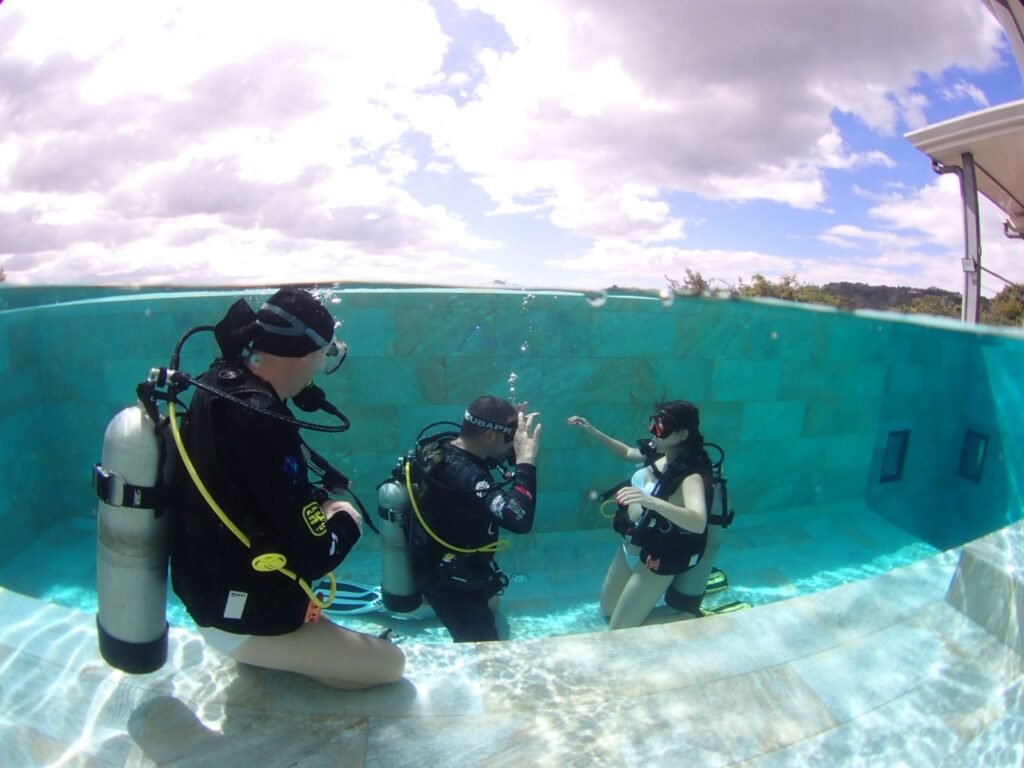
You can tell within the first five minutes if scuba is going to feel like freedom – or like you are fighting your own breathing. The difference usually isn’t “talent.” It’s coaching, pace, and a training plan that puts comfort first.
If you’re considering an SSI Open Water certification in Costa Rica, you’re in a great place to learn. Warm Pacific water, real marine life, and vacation energy help. But Costa Rica is still the ocean – conditions change, visibility can vary, and some sites have current. That’s why the right course is less about rushing to a card and more about becoming the kind of diver who stays calm when something feels new.
Why Costa Rica is a strong place to get certified
Costa Rica’s Guanacaste coast is popular for a reason. You get accessible dive sites, short boat rides in many cases, and a real chance of seeing the animals people daydream about on their flight down – rays, turtles, reef sharks, and big schools of fish. The training feels like a purpose-built trip, not a sterile pool-only experience.
There’s a trade-off, and it’s worth saying out loud. Learning in the ocean means you may face surge, changing visibility, or current at some point in your course. For a beginner, that can sound intimidating. With a safety-first instructor and small groups, it’s actually a benefit: you learn real-world skills in real conditions, and you come out more capable.
The SSI Open Water course – what you’ll actually do
The SSI Open Water Diver certification is designed to take someone from “never tried scuba” to “able to plan and complete open water dives with a buddy,” within training limits. Most students are surprised by how much of the course is about calm repetition and good habits, not extreme challenges.
Digital learning first, then hands-on practice
SSI training typically starts with academic work you can complete before you arrive. That’s a huge advantage for travelers. You handle the concepts – pressure, buoyancy basics, equalization, safety procedures – on your own schedule, then you use your vacation time for what matters: water time with an instructor.
If you’re the type who likes to feel prepared, doing the learning portion before you land in Costa Rica makes your first in-water session noticeably easier. If you’re short on time, you can still complete it during your trip, but it can feel like homework competing with sunsets and tacos.
Confined water sessions (skills with control)
Confined water is where you build the foundation. Depending on the dive center, this could be a pool or a calm, protected ocean area. You’ll practice the skills that make you safe and self-sufficient: regulator recovery, mask clearing, buoyancy control, controlled ascents, and how to respond if something doesn’t feel right.
This is also where you learn how your body responds underwater. Equalization is personal. Breathing patterns are personal. Even something as simple as how much weight you need changes day to day. A good instructor watches all of that and adjusts the plan to you, not to the clock.
Open water dives (where it becomes real)
Open water dives are where you apply the skills in a natural setting. You’ll complete training dives that include skill demonstrations, but the goal isn’t to “perform for the instructor.” The goal is to show you can manage your gear, control your buoyancy, communicate with your buddy, and make smart decisions while enjoying the dive.
If you’re picturing constant drills, relax. The best courses keep skills efficient and purposeful, then get you into the part you came for: actual diving.
How long does an SSI Open Water course take in Costa Rica?
Most travelers can plan for 3-4 days depending on your schedule, how quickly you move through the learning portion, and sea conditions. Some people compress it, but there’s a cost: when you rush, you reduce the margin you have to absorb skills and build confidence.
If you can give yourself an extra day, do it. That buffer helps if weather shifts, if you want more practice, or if you just want to slow down and enjoy it.
There’s also a smart “vacation math” approach: arrive, get settled, and start the course the next morning. Trying to do academics after a travel day tends to make everything feel harder than it needs to.
Choosing a dive center for your course – what actually matters
Costa Rica has plenty of operators. Your job is to pick one that fits your learning style and risk tolerance. If you’re the kind of traveler who values premium execution over bargain pricing, you’re already thinking the right way.
Small groups change everything
With beginners, group size isn’t a detail. It directly impacts how much individual coaching you get, how quickly issues are spotted, and how calm the experience feels. In a small group, an instructor can catch a fin strap that’s slightly off, a student who is over-weighted, or early anxiety signs before they snowball.
Equipment maintenance is part of safety, not a bonus
A well-maintained regulator breathes smoothly. A BCD that holds air properly makes buoyancy easier. Masks that fit reduce stress. These sound basic, but for new divers they are the difference between “I’m learning” and “I’m struggling.” Ask how often gear is serviced and how the team checks equipment before leaving the dock.
Communication matters more than people admit
If you’re traveling from the US, you want briefings that are clear and calm, especially when you’re learning emergency procedures. Multilingual instruction can be a real advantage for families or mixed groups traveling together.
A responsible operator will not promise perfection
If a shop guarantees flat seas, perfect visibility, or “you’ll definitely see mantas,” be cautious. Ocean conditions are variable. What a great operator can promise is planning, site selection based on conditions, conservative decision-making, and coaching that keeps you comfortable.
What to pack (and what not to overthink)
You don’t need to show up with a suitcase of gear to do an SSI Open Water course in Costa Rica. Most centers provide the essentials. Bring a swimsuit you can move in, reef-safe sunscreen, and something warm for the boat ride back if you get chilly after multiple dives.
If you already know you love snorkeling, consider bringing your own mask and snorkel for fit and familiarity. That said, don’t buy random gear the week before your trip just because it’s on sale. Fit is everything, and your instructor can help you choose smartly after you’ve actually been in the water.
Common beginner concerns – with honest answers
Nerves are normal. Almost everyone has a “moment” in training where their brain says, “Wait, I’m breathing underwater.” The course is built for that.
If you’re worried about your ears, the key is to go slow and equalize early and often. Some days are easier than others, and an instructor can adjust descent technique and pacing. If you’re congested, a conservative approach is the right approach – you can’t out-tough ear issues.
If you’re worried about sharks, know this: reef sharks in Costa Rica are typically shy and not interested in divers. Seeing one from a respectful distance is a privilege, not a threat. Your instructor will brief you on calm behavior and positioning.
If you’re worried about fitness, you don’t need to be an athlete, but you do need to be comfortable in the water and able to handle basic swimming. If you’re unsure, say it early. A supportive team will adapt the pace and build you up step by step.
Making your certification trip feel like a vacation
The best certification trips don’t feel like boot camp. They feel structured, clear, and surprisingly relaxing because you know what’s happening next.
Plan your days so you have margin. Don’t book an all-day jungle tour in between training sessions. Give yourself real sleep. Hydrate more than you think you need to. If you’re staying near the coast, build in quiet time where your body can recover from sun, salt, and new skills.
If you want the simplest version of this kind of trip – where training, guided diving, and lodging are coordinated by one team – you can do your SSI course with ChrisDiving and keep everything centered on safety, small-group coaching, and well-maintained equipment near the Catalinas Islands.
After you’re certified – what comes next
New divers often ask, “Am I ready to dive anywhere now?” The honest answer is: you’re ready to dive within your training limits, and you’ll keep building comfort with experience. The smartest next step is a few guided fun dives after certification. You’ll reinforce buoyancy, improve air consumption, and get used to planning with a buddy in the real ocean.
From there, you can choose what kind of diver you want to be. Some people love gentle reef dives and photography. Others want to train deeper, add navigation skills, or move toward Rescue training for stronger awareness. There’s no rush, but there is momentum – and the first few dives after certification are where confidence really locks in.
When you picture yourself finishing your SSI Open Water course in Costa Rica, don’t picture a plastic card. Picture the moment you stop thinking about your regulator, your buoyancy starts to click, and you realize you’re calm enough to actually look around. That’s the point. Keep choosing the option that builds that feeling, and the ocean gets bigger in the best way.
