You do not need every scuba specialty course. You need the right one for the kind of diver you want to become.
That is the simplest way to use this guide to scuba specialty courses. Some specialties make you safer and more comfortable. Some open up dives you cannot do without extra training. Others sharpen a skill you already use and help you enjoy the water more. The best choice depends on your experience, your upcoming trip, and honestly, the part of diving that makes you want to get back in the water.
If you are planning to dive in Costa Rica or anywhere with current, deeper sites, changing visibility, or exciting marine life, specialty training can make a noticeable difference. You feel calmer, move better, and spend less mental energy managing the basics. That leaves more attention for the dive itself.
What scuba specialty courses are really for
A specialty course is not just a badge on your profile. At its best, it is focused training for a real-world diving situation.
Open Water teaches the foundation. Advanced-level training broadens your comfort zone. Specialty courses go one step further by spending more time on a specific environment or skill set, whether that is buoyancy, deep diving, nitrox, navigation, night diving, or stress and rescue-related development.
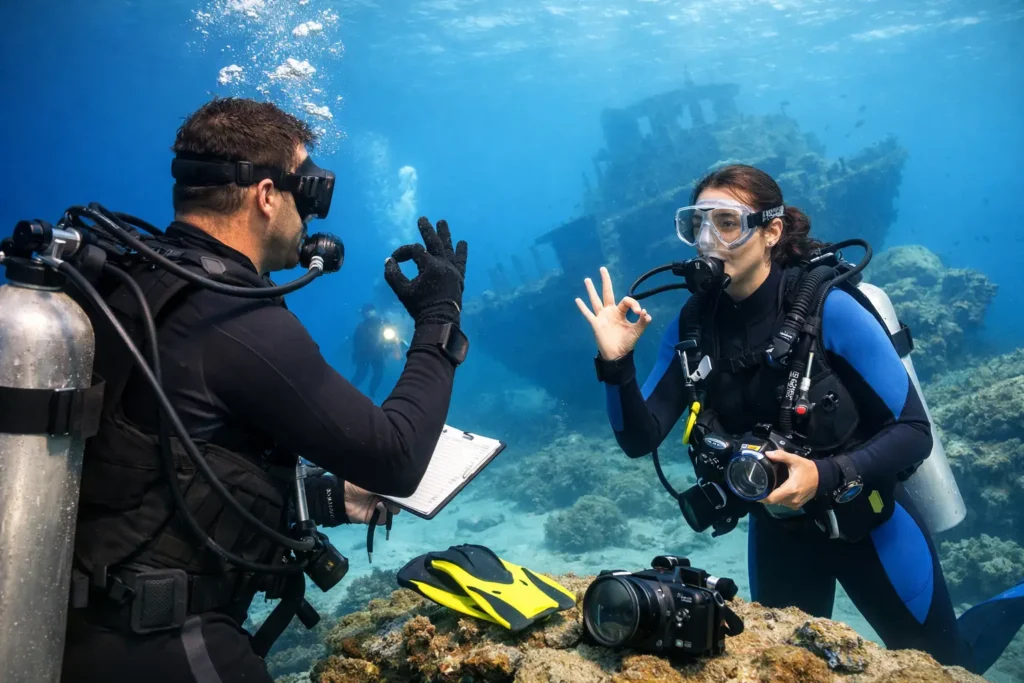
That extra focus matters because confidence underwater is usually built through repetition with good coaching. A diver who has practiced descents, gas planning, navigation, or equipment setup under instructor supervision will usually be more relaxed than a diver trying to figure it out on the fly during a vacation dive.
How to choose from this guide to scuba specialty courses
The smartest way to choose a specialty is to match it to your next few dives, not your distant someday plans.
If you are heading to a destination known for deeper sites, a Deep Diving specialty may be the most useful. If you burn through air quickly or tend to feel task-loaded underwater, Perfect Buoyancy may improve almost every dive you do after it. If you want longer no-decompression limits and more conservative gas choices, Enriched Air Nitrox often gives immediate value, especially for repetitive diving on a trip.
There is also a difference between useful and urgent. Night diving sounds exciting, and it is, but if your buoyancy and air consumption still need work, another specialty may give you more benefit first. The same goes for currents, wrecks, or search and recovery. These can be excellent courses, but they are best taken when the foundation is solid enough that the new task does not overload you.
The best first specialty for most divers
For many divers, buoyancy is the best place to start.
That might not sound as exciting as deep or night, but it has the widest payoff. Better buoyancy improves air consumption, trim, confidence, marine life encounters, and overall control. It also reduces contact with the reef and makes diving easier on your body because you stop fighting the water.
A close second is Enriched Air Nitrox. It is practical, efficient, and especially useful on dive travel where you may be doing multiple dives over several days. The course is not physically demanding, but it does require attention to analysis, labeling, and depth limits. Divers who like clear procedures usually enjoy it.
If you are a newer diver, those two specialties often create the strongest base for everything that comes next.
Specialty courses that fit common diving goals
If your goal is more adventure, Deep Diving and Night and Limited Visibility are common next steps. Deep training helps you plan and execute dives with more awareness around gas, narcosis, ascent discipline, and problem prevention. Night training changes how you communicate, navigate, and manage attention. Both can be rewarding, but they ask for calm basic skills.
If your goal is smoother vacation diving, Nitrox, Perfect Buoyancy, and Navigation are hard to beat. They do not always get the most attention in photos or social posts, but they often make the biggest difference in how easy and enjoyable a dive trip feels.
If your goal is handling more challenging conditions, training in currents, waves, or stress management becomes more relevant. This is where honest self-assessment matters. Some divers want challenge because they are curious. Others want it because they feel rushed into keeping up with more experienced buddies. Only the first reason usually leads to good learning.
If your long-term goal is Divemaster or Instructor training, your specialty choices should support your professional growth. In that case, choose courses that improve control, situational awareness, and problem solving rather than collecting random certifications. The divers who progress well tend to build depth in a few useful areas, not chase quantity.
Courses that sound exciting but depend on timing
There is nothing wrong with choosing a specialty because it looks fun. Diving should be fun. But timing still matters.
Wreck, DPV, search and recovery, or advanced navigation-style specialties can be excellent when you are ready for them. They become less valuable if you are still working on basic trim, equalization, air use, or comfort during descents. The risk is not only performance. It is also enjoyment. A diver who feels overloaded usually remembers the stress more than the experience.
That is why good instructors do not just sell a course. They ask where you are in your training, how often you dive, and what conditions you are likely to face. The right answer is sometimes, not yet. That is still good guidance.
What to look for in a specialty instructor
The quality of the coaching matters as much as the specialty itself.
A good instructor keeps the course personal, not rushed. You should feel that there is time to ask questions, repeat a skill if needed, and understand why each procedure matters. Smaller groups usually help, especially for divers who want more feedback or who have not been in the water recently.
Equipment standards matter too. Specialty training often adds task loading, so this is not the moment for poorly maintained gear or casual briefings. You want a center that treats safety as part of the experience, not as a disclaimer before the fun starts.
Language matters more than people expect as well. If you are learning new procedures, solving small problems, and absorbing dive planning details, it helps to do that in the language you are most comfortable with. Clear communication builds confidence fast.
Should you take specialty courses on vacation?
Usually, yes – if you choose the right course for the trip.
Vacation is a great time to do specialties because you are already in the right environment and focused on diving. Courses like Nitrox, Deep, Navigation, or Perfect Buoyancy can fit naturally into a trip and add value right away.
The trade-off is pace. Some travelers want every dive to feel carefree, with no studying or skill practice. Others enjoy mixing training with fun dives because it gives the trip more purpose. Neither approach is wrong. It depends on how you like to travel and whether you want structure or pure leisure.
If you have limited time, avoid stacking too many courses back-to-back. Learning is better when you have space to absorb it. One well-chosen specialty often beats two rushed ones.
A practical way to decide
Ask yourself three questions. What type of dives am I likely to do in the next year? What part of diving still feels less comfortable than I want it to? And what training would make me feel more relaxed, not just more impressive on paper?
Those answers usually point in the right direction. A diver planning several tropical trips may get immediate value from Nitrox and buoyancy. A diver preparing for sites with depth or current may need more environment-specific training. A diver returning after a long break may benefit from a refresher first, then a specialty once the basics feel natural again.
That last point is worth emphasizing. A specialty course is not a substitute for rebuilding comfort. If you have been out of the water for a while, start with that honesty. You will get more from the course afterward.
The best specialty course is the one you will use
There is no universal order that fits every diver. The best course is the one that supports your real diving, with an instructor who takes the time to coach you properly.
At ChrisDiving, that usually means helping divers choose training that matches their experience, conditions, and goals rather than pushing the biggest package. For some people, that means buoyancy and confidence-building in small groups. For others, it means preparing for deeper sites, repetitive diving, or a longer professional path.
Good specialty training should leave you feeling more capable, not just more certified. Choose the course that makes your next dive calmer, safer, and more enjoyable – then build from there.


